15 July 2026
The da Vinci robotic system: what it is, how it works, and why it matters for patients
Dr Pieter Marais explains the da Vinci surgical robot in plain language — what it looks like, how the wristed instruments work, and what robotic-assisted surgery means for your recovery.

If your surgeon has mentioned "robotic surgery" or "the da Vinci", you probably have questions. Is a robot doing the operation? Is it safe? Does it actually help? This guide walks through what the da Vinci system is, what it looks like in theatre, and — most importantly — what it means for you as the patient.
The da Vinci is not an autonomous robot
The single biggest misconception is that a robot performs the surgery on its own. It does not. The da Vinci is a surgeon-controlled instrument platform. Every movement is driven by Dr Marais's hands and feet in real time — the system simply translates those movements, with sub-millimetre precision, to instruments working inside your body. If the surgeon lifts his hands off the controls, nothing moves. There is no automation, no AI making decisions, no possibility of the machine "acting on its own."
Think of it the way a musician thinks of a fine instrument: the violin doesn't play itself, but a well-made violin lets a skilled player do things a cheaper one cannot.
What it looks like in theatre
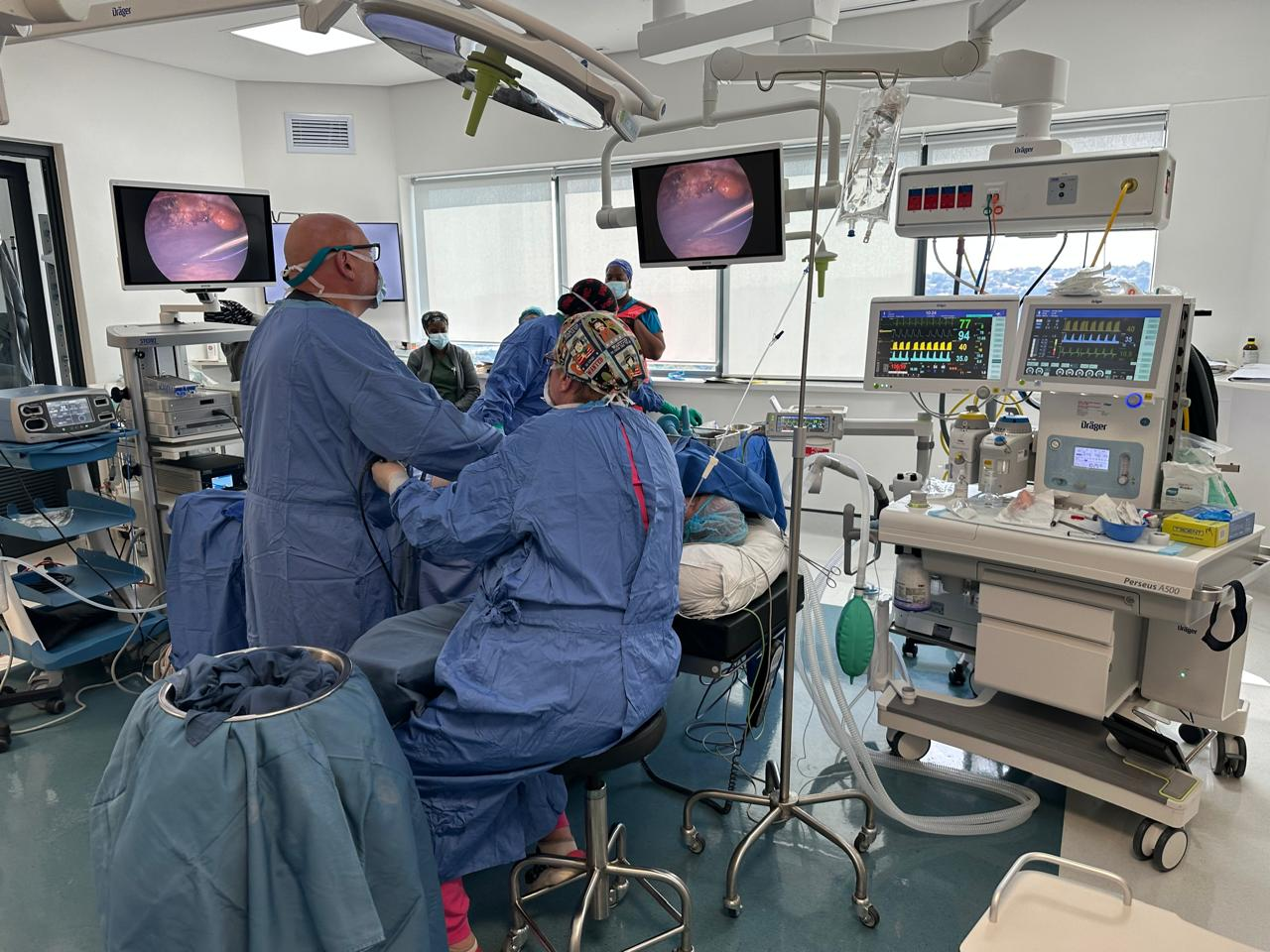
A da Vinci theatre has three separate components:
- The surgeon console — where Dr Marais sits during the operation. He looks into a high-definition 3D viewer that gives him a magnified, stereoscopic view of the operating field. His hands move master controls; his feet operate pedals for camera, energy and clutching.
- The patient-side cart — the tall unit standing next to the operating table, with four robotic arms. Three arms hold instruments; one holds the endoscopic camera. A trained bedside assistant supervises the arms, changes instruments, and manages the patient throughout.
- The vision tower — houses the light source, video processing and screens for the rest of the team to see what the surgeon sees.
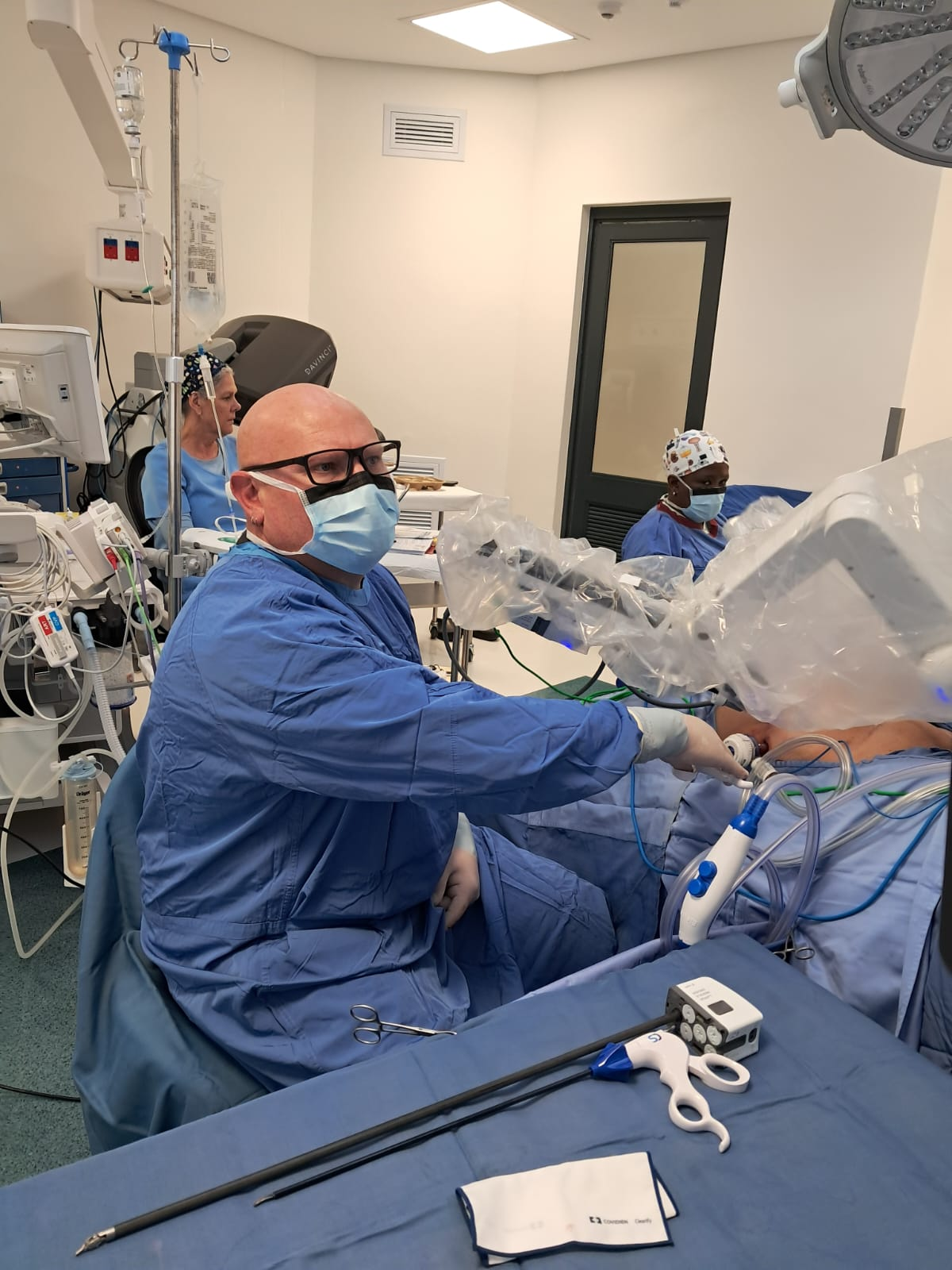
The instruments enter your body through the same small keyhole incisions used in ordinary laparoscopic ("keyhole") surgery — usually 8 mm each. There is no large open cut.
The wristed instruments — the real advance
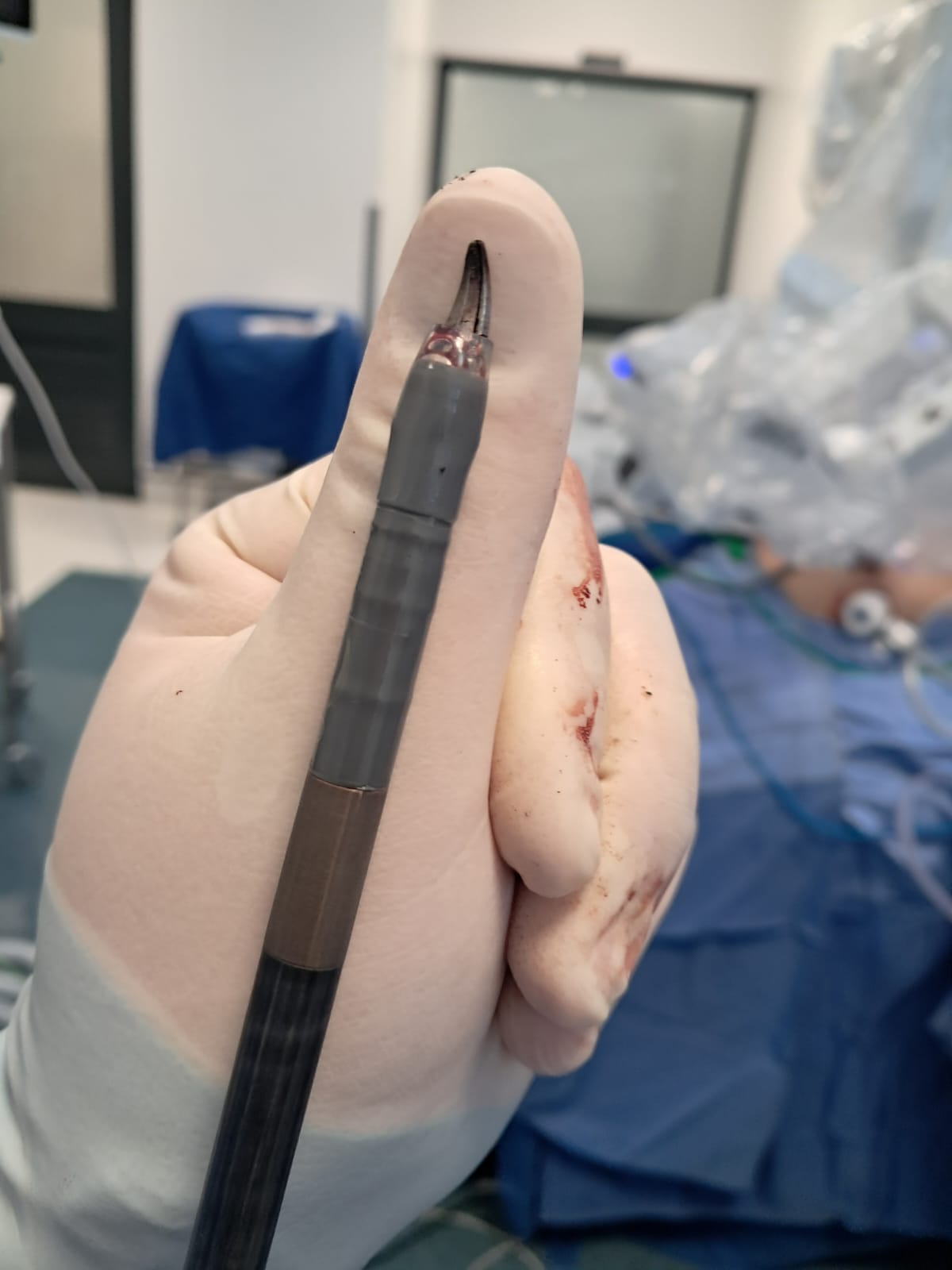
The tip of each da Vinci instrument has a fully articulated wrist — Intuitive Surgical calls this EndoWrist. It gives the surgeon seven degrees of freedom, which is more than the human wrist itself. Ordinary laparoscopic instruments are essentially long, straight sticks that can only pivot at the point where they enter the body wall; the wristed instruments can bend, rotate, and reach around structures inside a confined space.
This matters most in three situations:
- Deep pelvic surgery — the male pelvis and the space around the rectum, uterus and vagina is narrow and bony. Wristed instruments can suture and dissect at angles that a straight stick simply cannot reach.
- Obese patients — a thicker body wall lengthens the "lever" a surgeon has to work against with ordinary laparoscopic instruments, which reduces precision and increases fatigue. The da Vinci compensates for that mechanically and gives a stable, tremor-filtered view.
- Fine reconstructive work — mesh fixation for hernia repair, suturing a bowel anastomosis, or lifting a prolapsed pelvic organ onto the sacrum during a sacrocolpopexy.
What robotic surgery means for you
For most patients undergoing suitable procedures, published outcomes and Dr Marais's own experience show:
- Smaller incisions — several 8 mm keyholes instead of one long open scar.
- Less post-operative pain — smaller cuts and less tissue handling.
- Faster return to normal activity — many patients go home the next day and are back at desk work within one to two weeks.
- Lower risk of wound complications — especially valuable if you are diabetic, overweight, or a smoker.
- Better outcomes in complex pelvic surgery — where the instrument's reach and precision matter most.
When Dr Marais uses the da Vinci
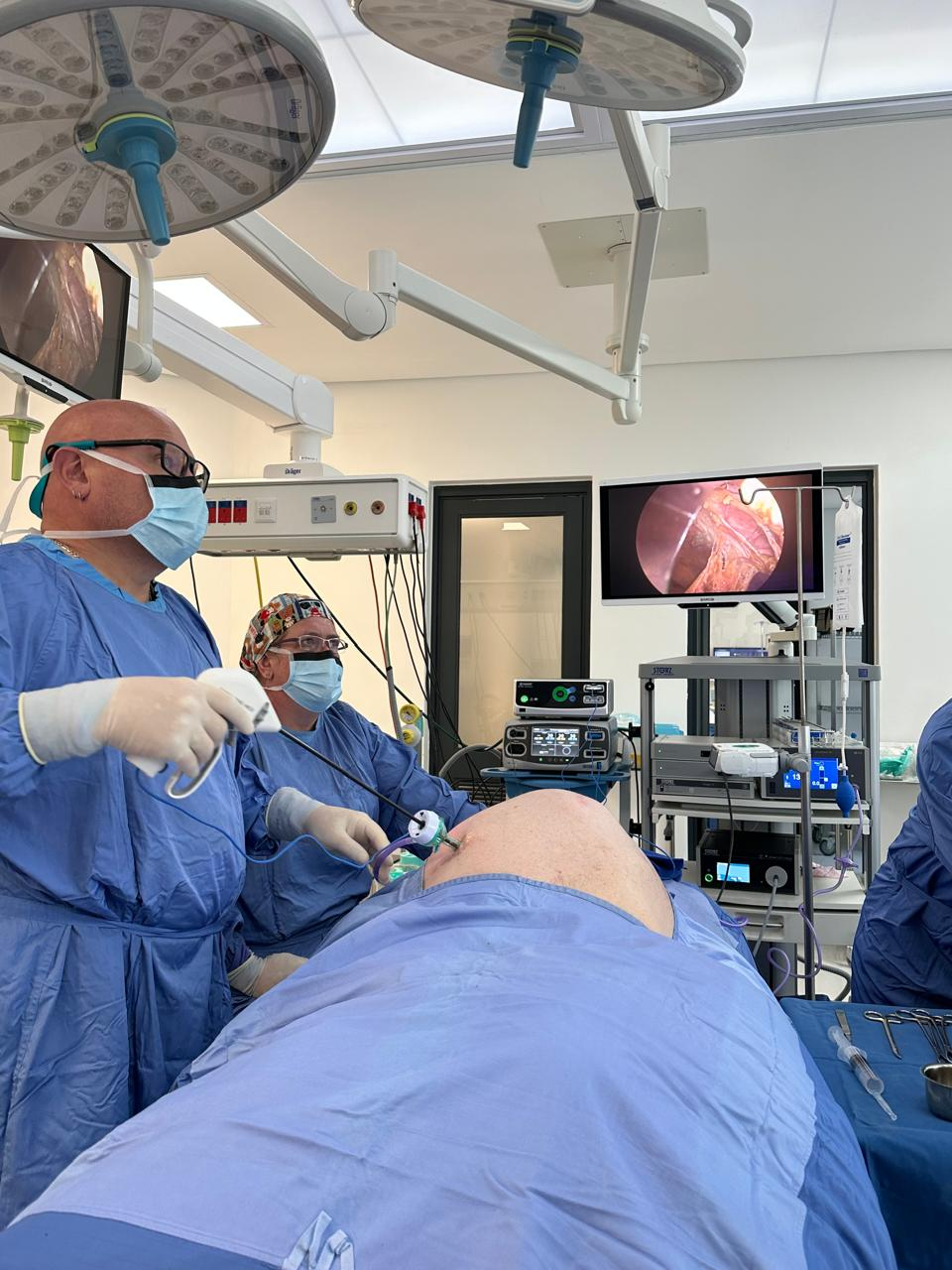
Robotic assistance is not the right answer for every case, and Dr Marais will always recommend the approach that gives you the best outcome, not the fanciest one. He most commonly uses the da Vinci for:
- Colorectal resections — right hemicolectomy, sigmoidectomy, low anterior resection and other colon and rectal cancer or diverticular procedures.
- Rectopexy and sacrocolpopexy — for rectal and vaginal prolapse, performed together with urologist Dr Colin Martheze when combined pelvic floor repair is needed.
- Ventral and inguinal hernia repair in obese patients — where the wristed instruments make mesh placement more accurate.
- Complex gallbladder and hiatal hernia cases — where dissection in tight anatomy benefits from the enhanced view.
Where Dr Marais operates on the da Vinci
Robotic surgery requires a hospital that has invested in the platform and a trained theatre team. Dr Marais performs robotic-assisted procedures at Johannesburg Surgical Hospital, depending on your medical aid, location and the specific procedure.
Common questions
Is robotic surgery safe?
Yes. The da Vinci system has been in clinical use worldwide for over two decades and is one of the most extensively studied surgical platforms in medicine. Safety depends far more on the surgeon's experience than on the equipment.
Is the surgeon really in control?
Completely. Every instrument movement is a direct translation of Dr Marais's hands. The system filters out tremor and scales movement (for example, a 3 cm hand movement can become a 1 cm instrument movement), but it never initiates action.
Does medical aid cover it?
Most major South African medical schemes cover robotic-assisted surgery when it is clinically indicated, though some plans require pre-authorisation and there may be co-payments on the hospital component. Our rooms will give you a written quotation with the procedure codes to submit to your medical aid, so you can confirm your benefits before the procedure.
Is recovery really faster?
For the procedures where robotic assistance genuinely helps — deep pelvic surgery, complex hernias, colorectal resections — yes, most patients recover faster than with open surgery, with pain and return-to-work comparable to or better than standard laparoscopic surgery.
Is it more expensive?
The equipment cost is higher, and hospitals price it accordingly. In many cases the shorter hospital stay and faster return to work offset that. Dr Marais will discuss expected costs before you commit.
If you have been told you need surgery and are wondering whether the robotic option is right for you, book a consultation. Dr Marais will explain the specific trade-offs for your case in plain language — no pressure and no jargon.