Adrenal Surgery (Laparoscopic & Retroperitoneal Adrenalectomy) in Johannesburg
The adrenal glands sit above each kidney. They occasionally develop tumours — some hormonally active (Cushing's, Conn's, phaeochromocytoma), some found incidentally on a scan.
Performed by Dr Pieter Marais at Johannesburg Surgical Hospital, Randburg, Johannesburg.
What it involves
Minimally invasive adrenalectomy — through three or four small incisions — is the standard of care for most benign adrenal tumours. Dr Marais offers both routes to the gland: the transperitoneal approach through the abdomen, and the retroperitoneal (posterior retroperitoneoscopic) approach through the flank and back, which reaches the adrenal gland directly without entering the abdominal cavity at all.
Adrenal tumours fall into three broad groups. Functional tumours secrete hormones — cortisol (Cushing's syndrome), aldosterone (Conn's syndrome), or catecholamines (phaeochromocytoma). Non-functional incidentalomas are found on scans done for other reasons. Rarely, adrenal cortical carcinoma or metastasis is the cause.
Phaeochromocytoma requires two to three weeks of alpha-blockade before surgery to prevent dangerous blood-pressure swings intra-operatively. This preparation is done in partnership with an endocrinologist and the anaesthetic team, and is what makes phaeochromocytoma surgery safe in experienced hands.
The laparoscopic approach can be transperitoneal (through the abdomen) or retroperitoneal (through the flank and back). In the transperitoneal route the bowel, and on the right the liver, are gently moved aside to expose the gland — a familiar route with wide views of the surrounding vascular anatomy. In the retroperitoneal route the patient is positioned on the side or face-down, three small ports are placed directly over the flank, and the surgeon works in the narrow space behind the abdominal lining, arriving at the adrenal gland from behind.
The retroperitoneal approach has real advantages in selected patients. Because the abdominal cavity is never opened, the bowel is not handled at all — so wind and bowel function return quickly, pain is usually less, and previous abdominal operations or adhesions become almost irrelevant. It is especially useful for smaller benign tumours, for patients who have had prior abdominal surgery, and when both glands need to be removed at one sitting. Larger tumours, suspected malignancy and unusual anatomy are generally better served by the transperitoneal route, and Dr Marais performs both.
When it's indicated
Functioning adrenal tumours, incidentalomas above 4 cm, tumours showing suspicious features on cross-sectional imaging, or when hormonal testing shows autonomous secretion.
The approach
Adrenal surgery is delicate and low-volume by nature. Preparation matters — particularly for phaeochromocytoma — and the team includes anaesthetists comfortable with these cases. Choosing between the transperitoneal and retroperitoneal route is part of the plan discussed at consultation.
Recovery
Two nights in hospital typically, and often shorter after a retroperitoneal adrenalectomy where the bowel is untouched. Return to desk work at one to two weeks; heavy activity at four weeks. Hormonal cure — resolution of high blood pressure, weight, mood — usually follows within weeks to months.
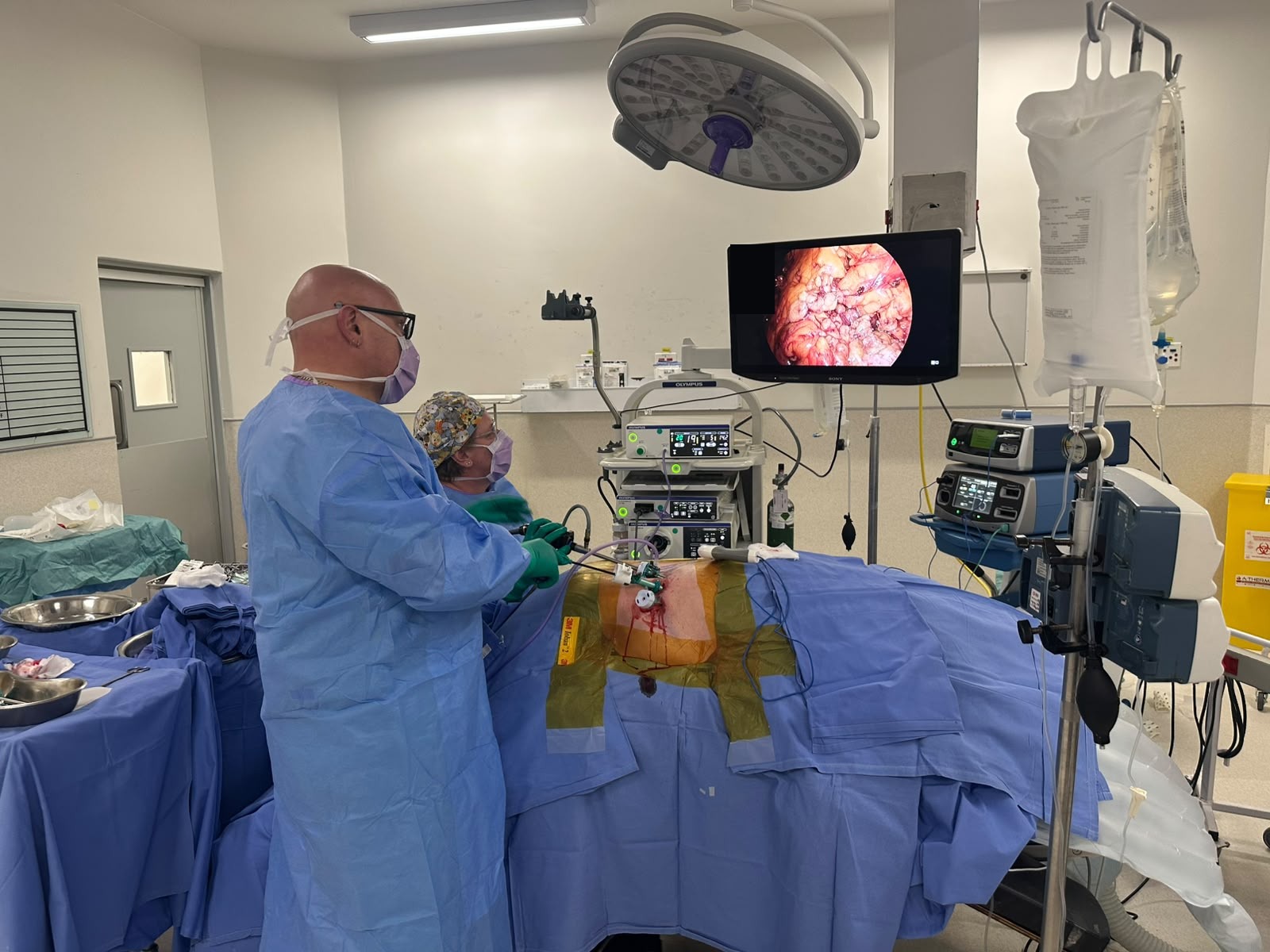
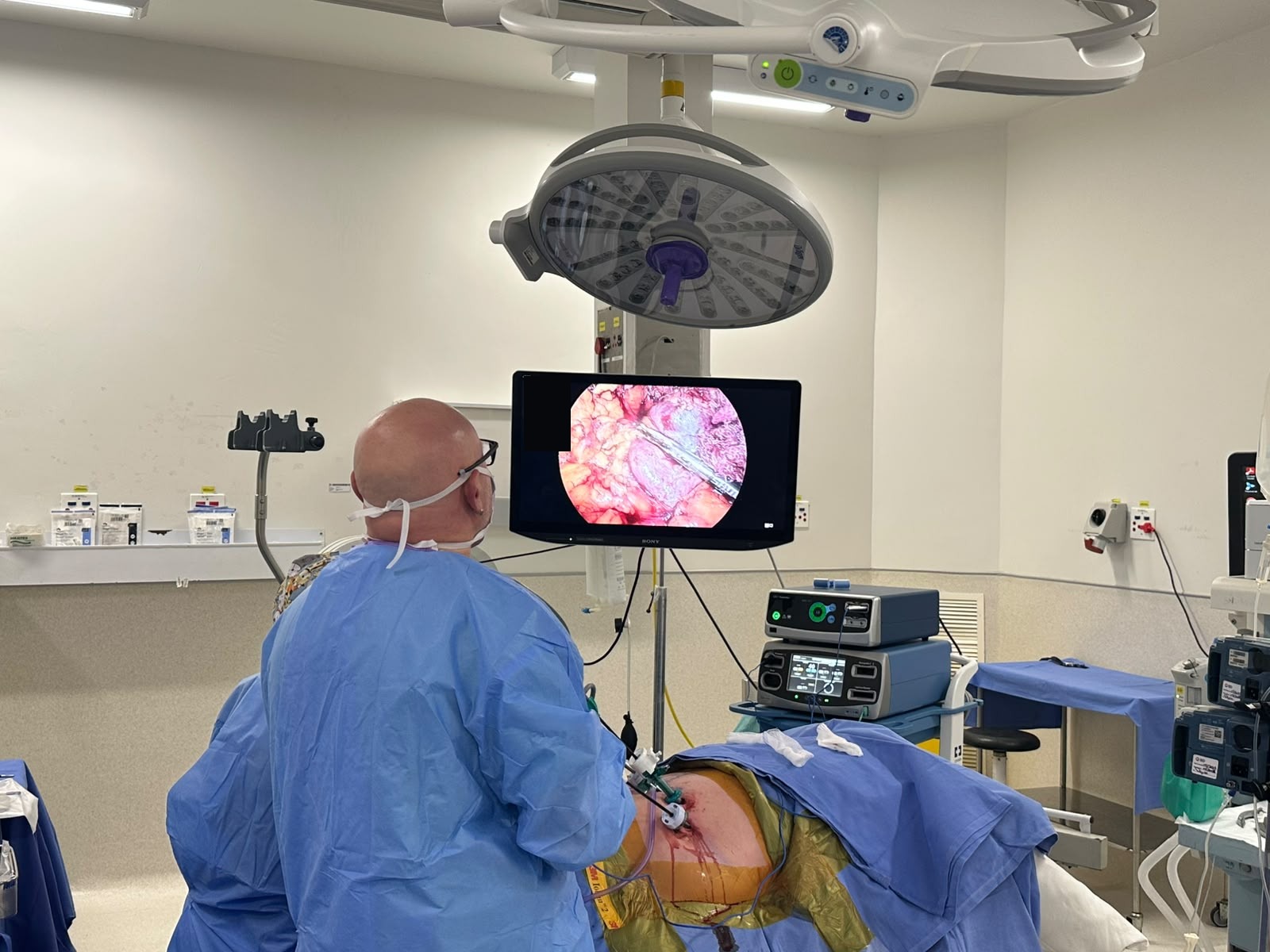
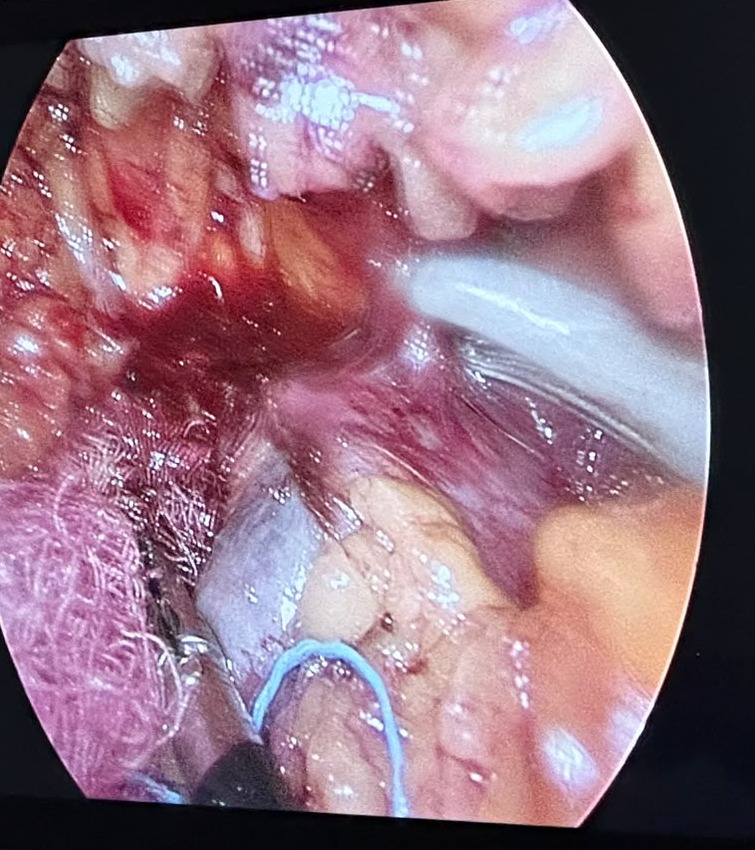
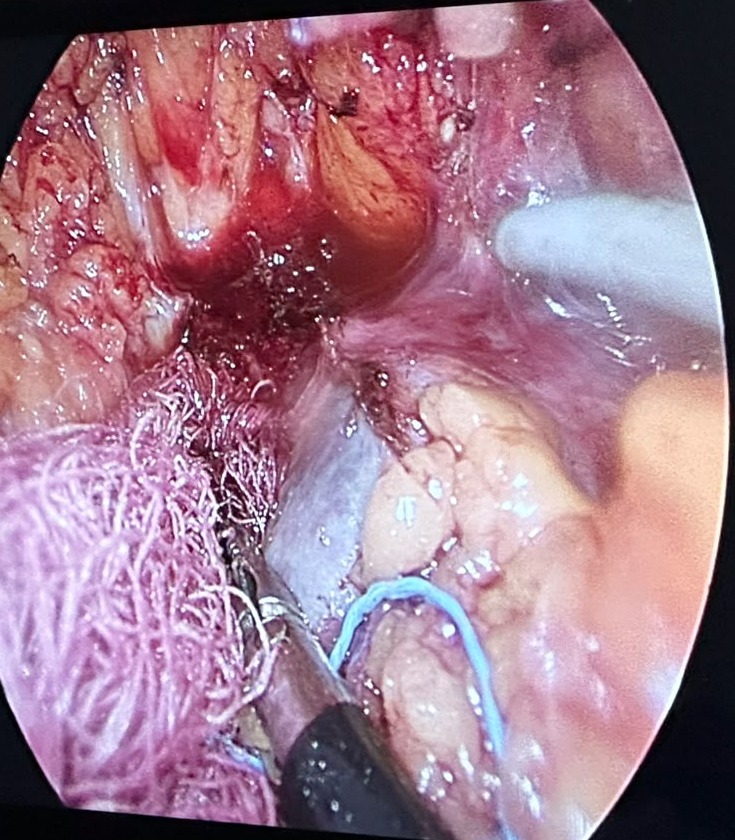
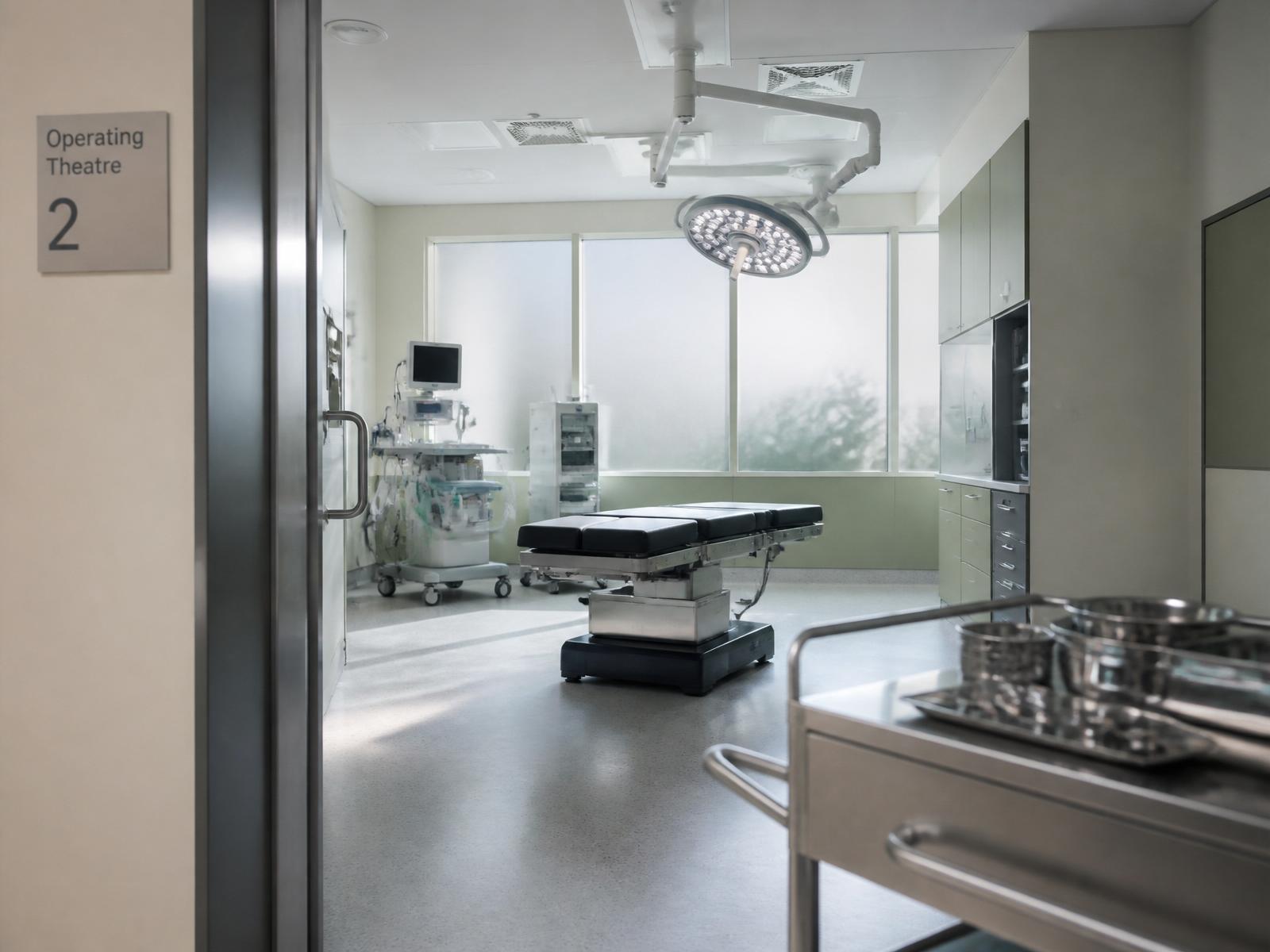
From the operating room
Adrenal Surgery FAQ
- Do all adrenal masses need surgery?
- No. Small (under 4 cm), non-functional, benign-looking incidentalomas can usually be followed with periodic imaging. Surgery is reserved for functional tumours, large lesions, or suspicious imaging features.
- What is a retroperitoneal adrenalectomy?
- It is keyhole removal of the adrenal gland from behind — through three small cuts in the flank and back — instead of through the abdomen. The abdominal cavity is never entered and the bowel is never moved, which usually means less pain and a faster return to eating and normal activity.
- Which approach is better for me?
- It depends on the size of the tumour, which side it is on, your body shape, and whether you have had previous abdominal surgery. The retroperitoneal route suits smaller benign tumours and patients with abdominal scarring or adhesions; larger or suspicious tumours are usually safer through the abdomen. Dr Marais will explain which route he recommends for you and why.
- I have had previous abdominal operations — can I still have keyhole surgery?
- Usually yes. Scar tissue from previous abdominal surgery is the main reason keyhole operations get converted to open surgery, and the retroperitoneal approach side-steps that scarring entirely by never entering the abdomen.
- Will I need medication after adrenalectomy?
- If both glands are removed (rare), lifelong steroid replacement is required. After removing a single gland for Cushing's syndrome, temporary steroid replacement is given while the other gland recovers.
- How is phaeochromocytoma surgery different?
- It requires meticulous pre-operative blood-pressure control with alpha-blockade for two to three weeks. The operation itself is technically similar but the anaesthetic requires close attention to blood-pressure swings when the tumour is manipulated.
Discuss adrenal surgery with Dr Marais
Send a short enquiry and the practice will be in touch during weekday office hours. Consultations take place at Johannesburg Surgical Hospital.
Explore related surgery
Next procedure
08Bariatric Surgery (Sleeve Gastrectomy & Gastric Balloon) →Sleeve gastrectomy and gastric balloon for weight and metabolic disease.