Rectopexy & Sacrocolpopexy (Pelvic Floor Repair) in Johannesburg
Rectopexy and sacrocolpopexy are minimally invasive operations that repair pelvic-floor prolapse from above (through the abdomen) rather than through the perineum or vagina. Dr Marais performs both robotically (da Vinci) and laparoscopically for benign pelvic-floor conditions — rectal prolapse, obstructed defecation and vaginal vault (apical) prolapse — often in conjunction with a gynaecology colleague when combined pelvic-floor repair is needed.
Performed by Dr Pieter Marais at Johannesburg Surgical Hospital, Randburg, Johannesburg.
What it involves
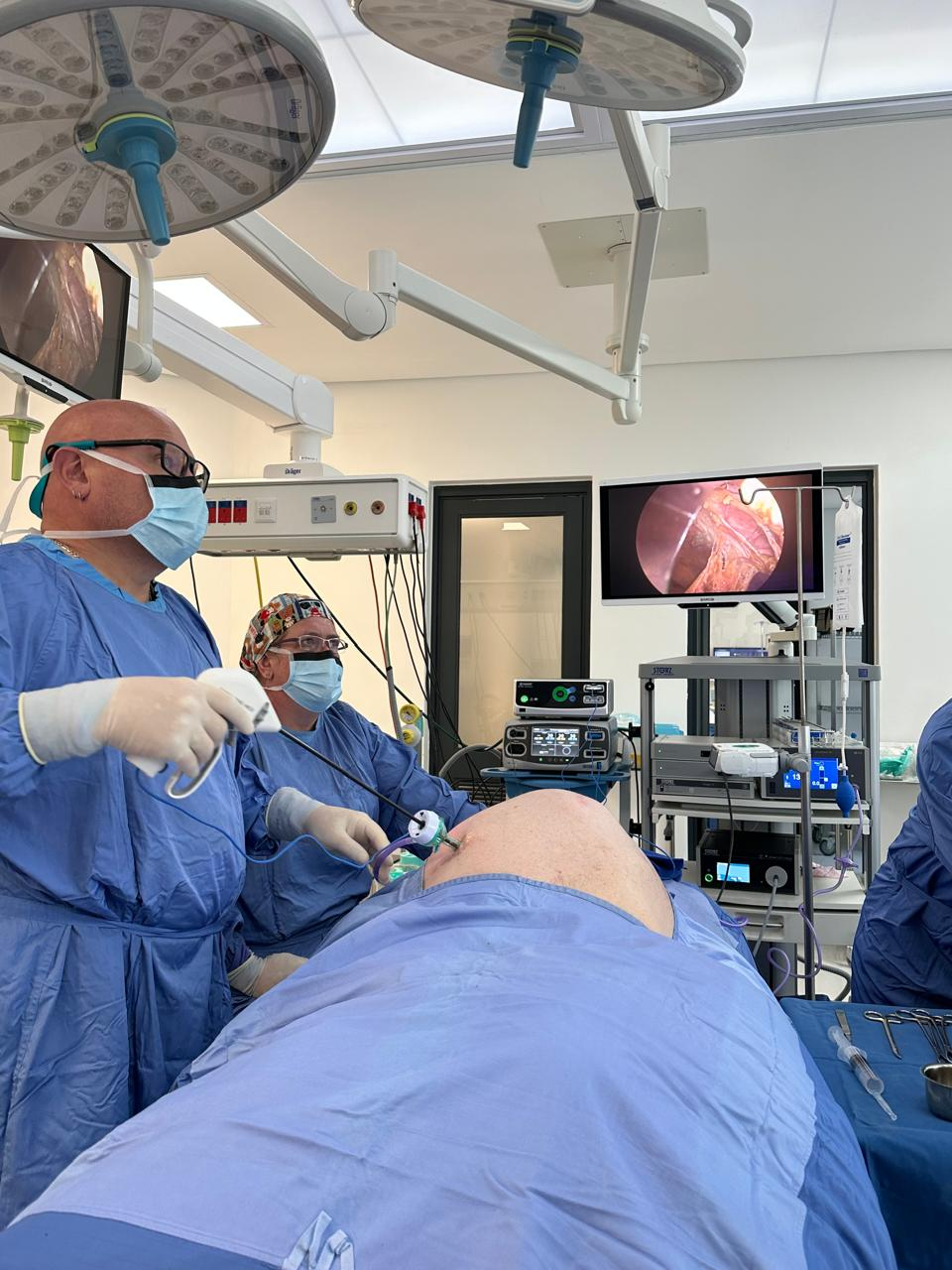
Ventral mesh rectopexy lifts and secures a prolapsing rectum back to the sacrum using a soft mesh strip, restoring normal anatomy and function. Sacrocolpopexy lifts a prolapsing vaginal vault (top of the vagina, after hysterectomy or with apical prolapse) up to the sacrum with a mesh in the same anatomical plane. Both are done through small abdominal ports, robotically or laparoscopically.
Rectal prolapse is more common than most patients realise, particularly in older women and in patients with longstanding constipation or straining. Left untreated it worsens, and the associated faecal incontinence and mucus discharge severely affect quality of life. Ventral mesh rectopexy has a low recurrence rate and preserves bowel function better than older perineal repairs.
Vaginal vault prolapse — the top of the vagina descending after hysterectomy — and apical prolapse have a similar impact on quality of life. Sacrocolpopexy is regarded as the most durable repair for apical prolapse, and the abdominal (laparoscopic or robotic) route has largely replaced open sacrocolpopexy because recovery is much quicker.
Both operations use a small strip of soft polypropylene or biological mesh secured between the pelvic organ and the sacral promontory. Placement is precise: too tight and the patient has discomfort or evacuation difficulty; too loose and the prolapse returns. Robotic wristed instruments help make that placement reproducible.
For combined pelvic-floor cases, Dr Marais operates jointly with Dr Colin Martheze, urologist. A shared theatre list means both surgeons are docked at the da Vinci console together — the colorectal component (ventral mesh rectopexy) and the urological / vault component (sacrocolpopexy) are completed in a single anaesthetic, with one coordinated recovery.
Because these are benign pelvic-floor procedures, decision-making is heavily quality-of-life driven. Dr Marais will discuss non-surgical options (pelvic-floor physiotherapy, pessary support, bowel-habit management) and only recommend surgery when symptoms clearly justify it and non-surgical measures have been tried.
When it's indicated
Rectopexy is indicated for full-thickness external rectal prolapse, symptomatic internal (intussusception-type) prolapse, and selected cases of obstructed defecation syndrome. Sacrocolpopexy is indicated for symptomatic vaginal vault prolapse or apical prolapse — a bulging or dragging sensation, difficulty with bladder or bowel emptying, or discomfort with activity — where a durable, minimally invasive repair is preferred.
The approach
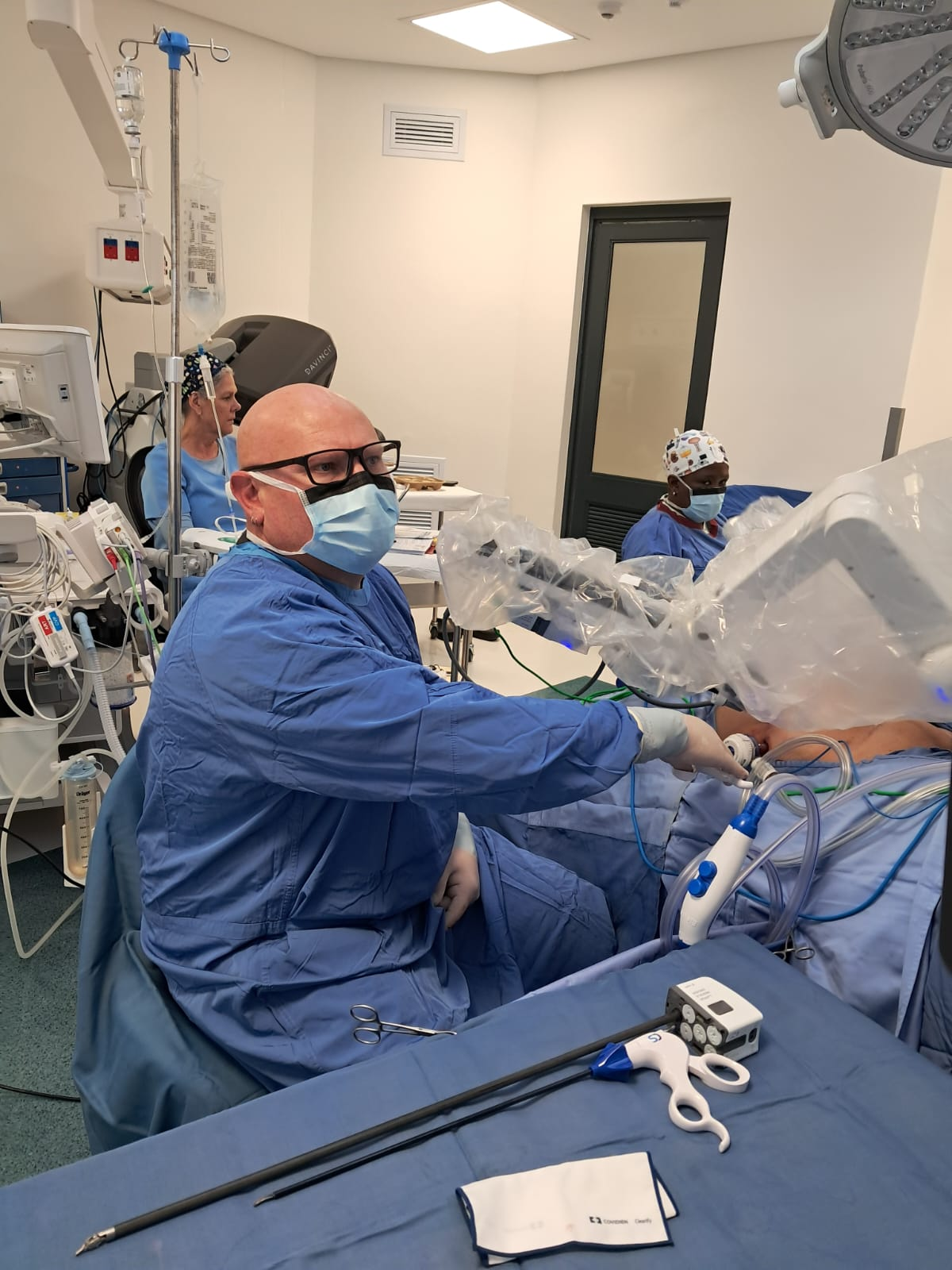
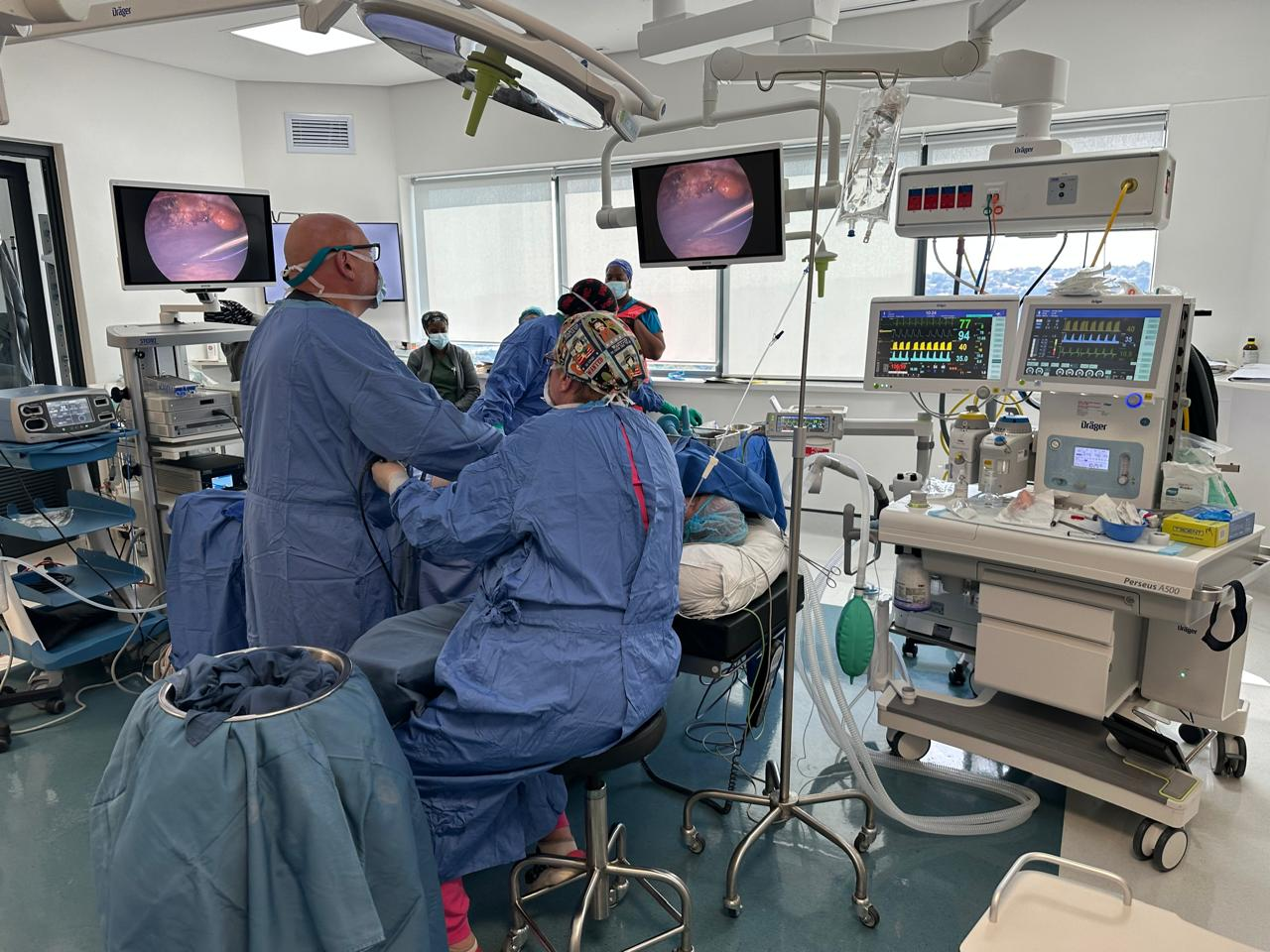
The robotic platform is particularly well suited to pelvic-floor surgery. The narrow bony pelvis leaves little room to work, and wristed instruments plus 3D high-definition vision allow precise dissection of the correct anatomical planes and accurate mesh placement onto the sacral promontory. Laparoscopic and robotic techniques give the same clinical result; the choice depends on the case and platform availability. When bladder, uterine or vaginal prolapse coexists with rectal prolapse, the operation is done jointly with Dr Colin Martheze (urologist).
Recovery
Typical hospital stay is one to two nights. Most patients walk within hours of surgery, eat and drink normally the same day, and are discharged the next morning. Return to desk work is usually within a week to ten days; heavy lifting and gym work are avoided for six weeks while the repair matures. Constipation is actively managed with laxatives in the early weeks to protect the repair.
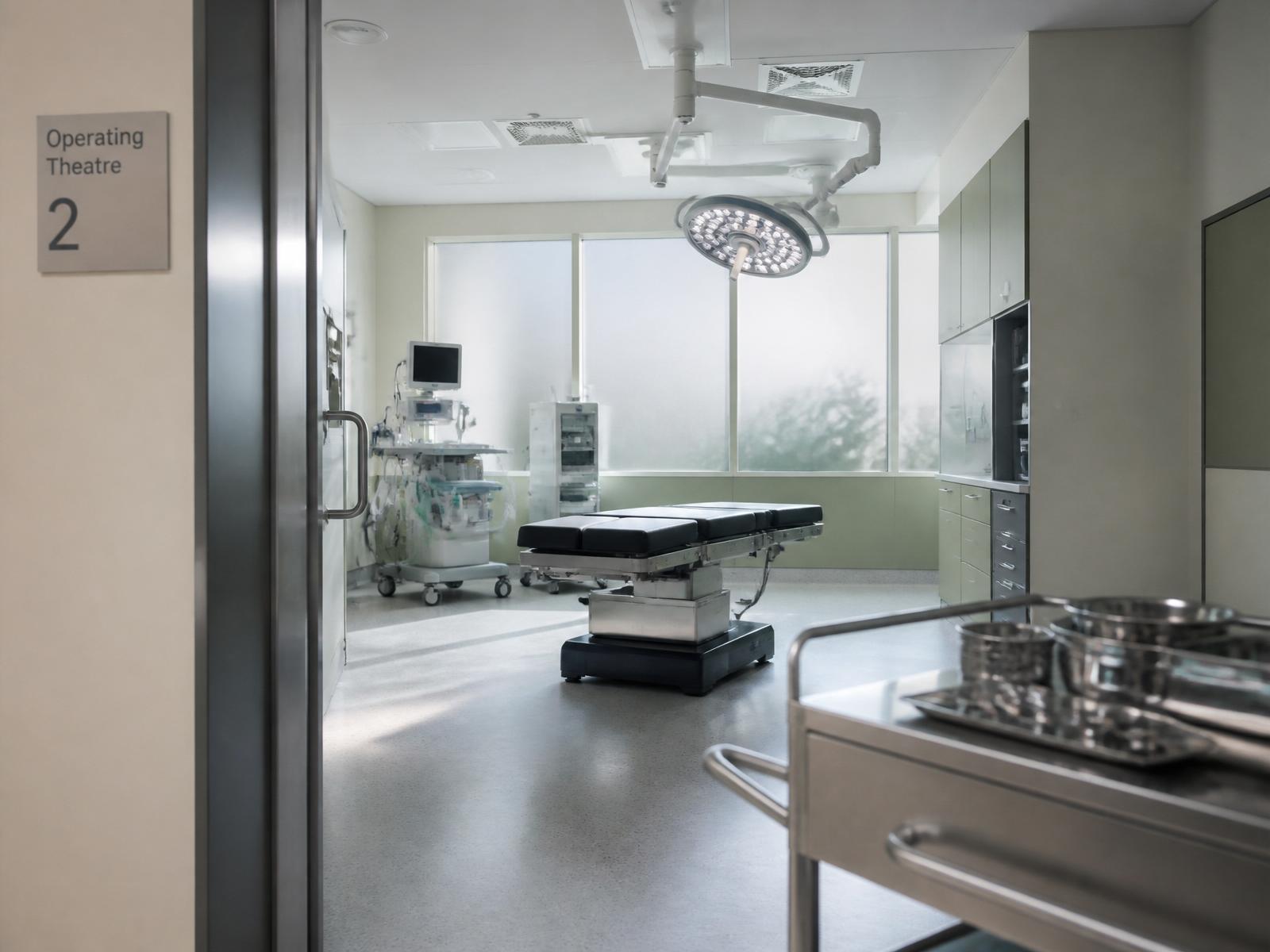
From the operating room
Rectopexy & Sacrocolpopexy FAQ
- Is rectopexy done robotically or laparoscopically?
- Both are options and give the same clinical result. Dr Marais uses the robotic (da Vinci) platform when it is available because wristed instruments and 3D vision are well suited to the narrow pelvis, and laparoscopy otherwise. Open surgery is rarely needed for elective pelvic-floor work.
- What is sacrocolpopexy and who is it for?
- Sacrocolpopexy is a minimally invasive repair for vaginal vault or apical prolapse — the top of the vagina descending after hysterectomy, or apical prolapse in general. A soft mesh strip lifts and secures the vaginal vault to the sacrum. It is the most durable repair for apical prolapse and is often done jointly with Dr Colin Martheze (urologist) when other pelvic-floor compartments are involved.
- Is mesh safe for pelvic-floor surgery?
- The mesh used in abdominal (laparoscopic or robotic) sacrocolpopexy and ventral mesh rectopexy is placed deep in the pelvis onto the sacrum, not into the vaginal wall — this is a different operation from the transvaginal mesh procedures that attracted safety concerns internationally. The abdominal route has a well-established safety and durability record.
- Can rectopexy and sacrocolpopexy be done in the same operation?
- Yes. When rectal prolapse coexists with vaginal vault prolapse — which is common — both can be repaired in one combined operation, with Dr Marais and Dr Colin Martheze (urologist) operating together on a shared theatre list. This avoids two separate anaesthetics and gives a coordinated pelvic-floor repair.
- How long is recovery?
- Most patients stay one to two nights in hospital, are back to desk work within a week to ten days, and can return to full activity including gym at about six weeks. Constipation is actively managed early on to protect the repair while it matures.
- Where does Dr Marais operate?
- Pelvic-floor surgery is performed at Netcare Olivedale Hospital in Randburg, Johannesburg, with the robotic platform when appropriate and — for combined pelvic-floor repair — jointly with Dr Colin Martheze (urologist).
Discuss rectopexy & sacrocolpopexy with Dr Marais
Send a short enquiry and the practice will be in touch during weekday office hours. Consultations take place at Johannesburg Surgical Hospital.
Explore related surgery
Robotic Surgery (da Vinci)
Certified da Vinci robotic surgeon — wristed instruments and 3D HD vision for the most precise minimally invasive surgery.
15Colorectal Surgery (Colectomy, Hemicolectomy, Sigmoidectomy, Proctocolectomy)
Robotic and laparoscopic colon and rectal resection for diverticular disease, IBD and colorectal cancer.
01Laparoscopic Surgery
Minimally invasive keyhole surgery — smaller incisions, faster recovery.
Next procedure
17Haemorrhoids & Piles Treatment →Assessment and treatment of piles (haemorrhoids) — banding, injection and surgical options.